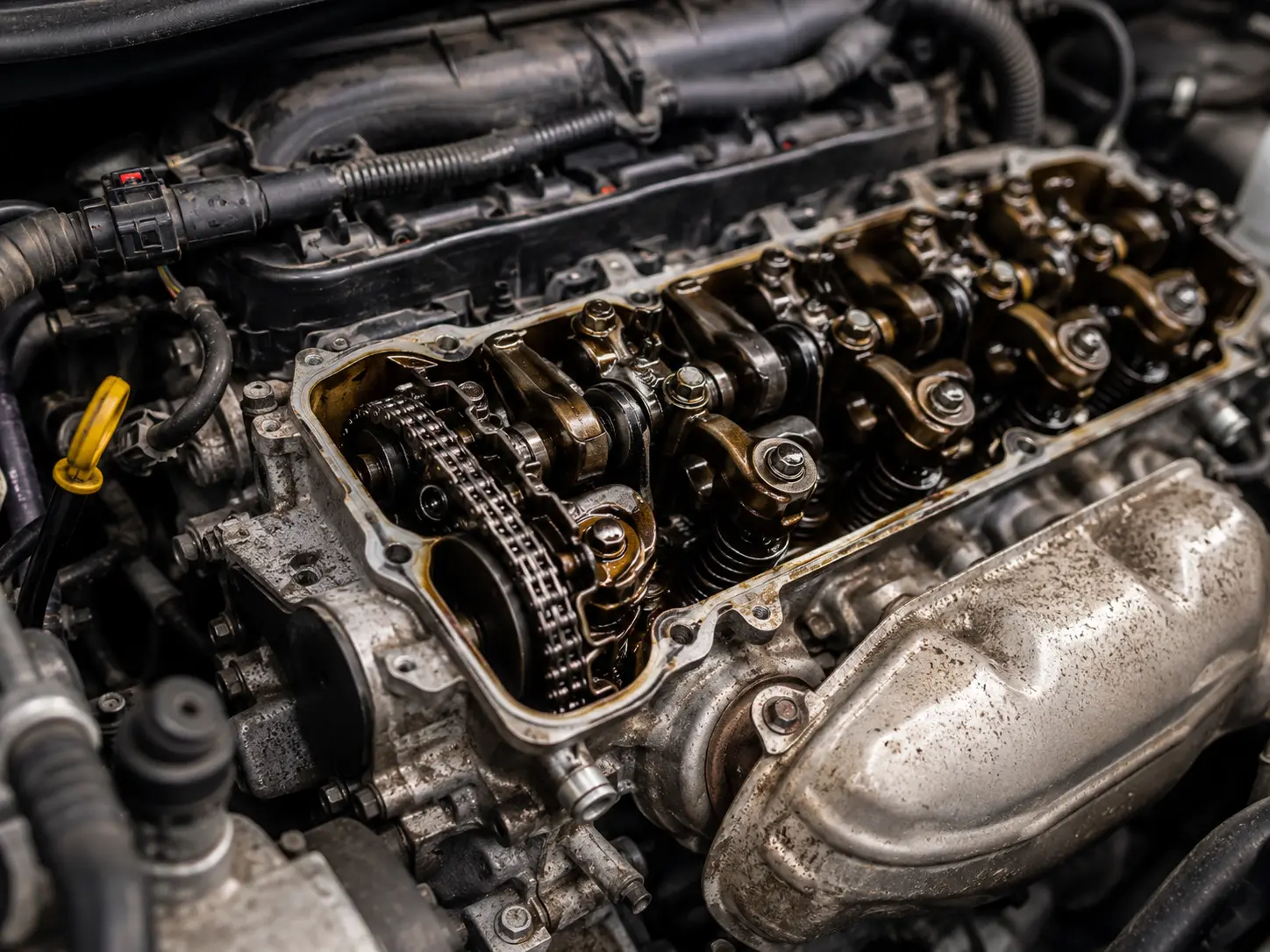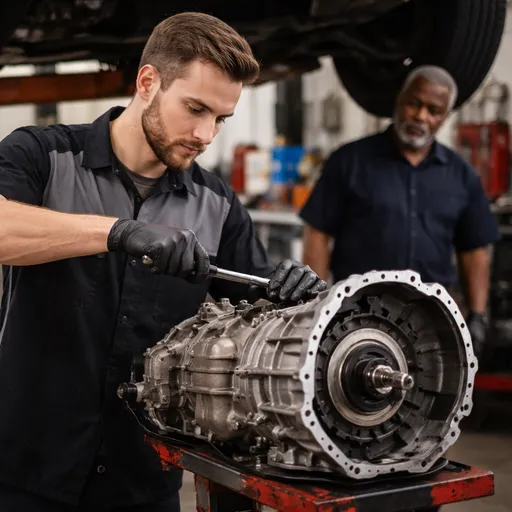

A shuddering, jerking, or slipping transmission on a 2011-2016 Ford Fiesta or 2012-2016 Ford Focus is almost always traced to the DPS6 PowerShift dual-clutch transmission. The root cause is overheating dry clutch packs combined with transmission control module (TCM) programming that was not suited to the design. The result is a transmission that bucks on light acceleration, hesitates when pulling away from a stop, slips between gears, or shudders at low speeds. This is a well-documented mechanical problem, and it became the subject of a settled class-action lawsuit.
Which Ford models have the DPS6 PowerShift transmission?
The DPS6 six-speed dual-clutch automatic was installed in the following US-market vehicles:
- 2011-2016 Ford Fiesta (1.6L Ti-VCT four-cylinder)
- 2012-2016 Ford Focus (2.0L Ti-VCT four-cylinder)
A separate, later lawsuit also alleged similar issues on 2017-2019 Fiesta and 2017-2018 Focus models. If your car falls in those later years, the same symptoms apply and the same diagnostic approach is used.
What does a DPS6 problem feel like when you drive it?
Owners describe a range of symptoms, and they often get worse over time. Here is a quick reference:
| Symptom | Likely Cause | Urgency |
|---|---|---|
| Shudder or vibration on light acceleration | Dry clutch slip / clutch pack wear | Moderate, diagnose soon |
| Hesitation or stumble pulling away from a stop | TCM programming / clutch engagement calibration | Moderate |
| Jerking or bucking at low speed | Clutch pack wear, TCM mismatch | Moderate to high |
| Slipping between gears, RPM flare | Advanced clutch wear | High, repair soon |
| Transmission warning light, limp mode | TCM fault, severe clutch or mechanical failure | High, do not delay |
What actually causes the shudder in the DPS6?
Most automatic transmissions use wet clutches, meaning the clutch packs run in transmission fluid that cools and lubricates them. The DPS6 uses dry clutches, which run without fluid. Dry clutches are lighter and more fuel-efficient, but they are also more sensitive to heat and wear.
Ford's TCM programming was commonly diagnosed as poorly matched to the dry-clutch design, causing the clutches to engage and disengage in a way that accelerated wear and produced the shudder owners felt.
Ford issued multiple TCM software updates over the production run. Some owners saw improvement after a software update. Others did not, because the clutch packs were already worn past the point where software could compensate.
Tech tip: A TCM software update is a reasonable first step if the clutch packs are not yet worn through. On a high-mileage car showing hard shudder and slipping, the clutch packs themselves need inspection before any software update is applied. Updating software on a mechanically worn transmission will not restore normal operation.
How does the problem progress over time?
Early stage (often under 40,000-60,000 miles): A light shudder on gentle acceleration from a stop, mostly noticeable in slow traffic. The car drives normally at highway speed. Many owners mistake this for an engine stumble or a spark plug issue.
Mid stage: The shudder becomes more frequent and more pronounced. Hesitation on acceleration is noticeable in everyday driving. The transmission may feel like it is hunting for the right gear. Some owners report a clunk when shifting from park to drive.
Late stage: Hard jerking and bucking, noticeable slipping between gears, and possible transmission warning lights. In severe cases the TCM puts the transmission into a reduced-function or limp mode. At this point, a clutch pack replacement or a remanufactured transmission unit is likely needed.
Is it safe to keep driving with this problem?
A mild shudder on light acceleration is not an immediate safety emergency. However, a transmission that hesitates, bucks hard, or slips in moving traffic creates an unpredictable driving situation.
If the car lurches unexpectedly in a merge on the Outerbelt or stalls out pulling into an intersection, that is a real hazard. The practical answer: get it inspected before the mid-stage becomes the late stage. Waiting turns a clutch job into a transmission replacement.
What was the Vargas v. Ford lawsuit about?
Vargas et al. v. Ford Motor Co. was a class-action lawsuit alleging that Ford knew the DPS6 PowerShift transmission was defective and continued to sell and lease vehicles equipped with it.
The case alleged that Ford failed to adequately disclose the problem to buyers and that repeated dealer repair attempts often did not fix the underlying issue. The lawsuit settled for approximately $77 million.
It covered eligible owners and lessees of 2011-2016 Ford Fiesta and 2012-2016 Ford Focus vehicles in the United States. The settlement period for new claims has closed. You can review the case details at the Berger Montague case page linked in the sources section below.
It is worth noting that a settlement is not a recall. Ford did not issue a recall that entitles current owners to a free dealer repair.
If your car still has the problem, the repair is an out-of-pocket service unless you have an active extended warranty or a separate legal claim. Check your VIN at NHTSA's recall lookup and contact Ford Owner Support to ask about any open service programs tied to your specific VIN.
Tech tip: Before authorizing any transmission repair on a DPS6, ask the shop to pull the TCM for stored fault codes and check whether the most current Ford software calibration is already loaded.
A repair record showing prior dealer software updates is useful context. It tells you whether software was already tried and whether the problem persisted afterward.
What does a DPS6 repair cost, and what moves the price?
There is no single honest number without seeing the vehicle. Here is what drives the cost:
- TCM software update only: The lowest-cost intervention. Only appropriate if clutch wear is minimal and the symptom is recent.
- Clutch pack replacement: A more involved repair that requires removing the transmission and replacing the dry clutch assemblies. Labor time is significant.
- Remanufactured transmission: On a high-mileage car with advanced wear, a remanufactured unit, such as a Jasper remanufactured transmission, is often the most reliable long-term solution. The upfront cost is higher, but a quality remanufactured unit comes with a warranty.
- Vehicle mileage and condition: A 90,000-mile car with a history of the symptom will likely need more work than a 45,000-mile car caught early.
- Prior repair history: If the transmission has been opened before, that affects the scope of work.
A proper diagnosis comes first. The inspection tells you which of these paths is actually needed. No shop should quote a transmission replacement without first confirming what is wrong.
Central Ohio's freeze-thaw cycles are hard on every part of a car, but they are not the cause of the DPS6 problem. This is a design issue that shows up regardless of climate.
That said, if your Fiesta or Focus has been sitting through Columbus winters with a transmission that is already struggling, the added cold-start stress does not help a worn clutch pack.
If you have questions about related Ford drivetrain issues, see our post on Power Stroke problems every Ford Super Duty owner should know .
For general transmission and engine wear patterns on other GM vehicles, see our post on GM 2.4 timing chain problems and oil consumption .
Clintonville Automotive Repair Service serves drivers in Central Clintonville , North Linden , East Linden , and Old North Columbus , as well as the broader Columbus area.
Frequently Asked Questions
Does the Vargas v. Ford settlement still apply to my car?
The Vargas v. Ford settlement covered eligible 2011-2016 Fiesta and 2012-2016 Focus owners and lessees. The settlement period has closed for new claims.
If you believe you have an unresolved claim, consult a class-action attorney or check the settlement administrator's records. The case reference is in our sources section.
Can a software update fix the shudder on a DPS6 transmission?
A TCM software update can reduce symptoms if the clutch packs are not yet worn through. If the dry clutches are already damaged, software alone will not restore normal operation.
A mechanical inspection is the only way to know which repair is actually needed.
Is it safe to keep driving with a shuddering PowerShift transmission?
A light shudder on gentle acceleration is not an immediate emergency. Hard jerking, slipping in traffic, or hesitation in a merge situation is a real hazard.
Get it diagnosed before the problem reaches the late stage, where the repair cost is significantly higher.
What does a DPS6 repair typically involve?
Repair ranges from a TCM software update to clutch pack replacement to a remanufactured transmission, depending on how far the wear has progressed.
The right answer requires a proper diagnosis first.
Does Clintonville Automotive work on Ford Fiesta and Focus transmissions?
Yes. We service all passenger car and truck makes, including Ford. Repairs carry a 3-year/36,000-mile nationwide warranty, and we use NAPA and Jasper components where applicable.
Paul Marquardt, owner of Clintonville Automotive Repair Service, and the team at 585 Oakland Park Ave, Columbus, will inspect your Fiesta or Focus, walk you through exactly what the transmission needs, and give you a written estimate before any work begins.
We are a AAA Approved Auto Repair facility and a NAPA AutoCare Gold Center. Repairs carry a 3-year/36,000-mile nationwide warranty.
Call us: (614) 263-5551 | Schedule online
Hours: Monday-Friday, 7:30 a.m. to 5:30 p.m. After-hours drop-off available via our lock box.